Looking for a game-changing CRM? Salesforce CRM isn’t just popular—it’s a powerhouse transforming how businesses connect with customers. Let’s dive into why it leads the pack.
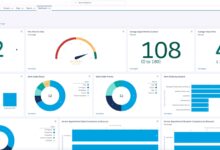
What Is Salesforce CRM and Why It Matters

Salesforce CRM is more than just customer relationship management software—it’s a complete digital ecosystem designed to streamline sales, marketing, service, and analytics. Born in 1999 as one of the first cloud-based CRMs, Salesforce disrupted the traditional software model by offering on-demand access without the need for complex installations. Today, it powers over 150,000 companies worldwide, from startups to Fortune 500 giants.
The Evolution of Salesforce CRM
Salesforce started with a simple mission: to make sales management easier through the cloud. Before Salesforce, CRM systems were typically on-premise, expensive, and difficult to scale. Salesforce changed that by introducing a subscription-based SaaS (Software as a Service) model. This innovation not only reduced upfront costs but also allowed businesses to scale rapidly.
- 1999: Salesforce launches with a focus on sales automation.
- 2004: Goes public with one of the most successful tech IPOs.
- 2005: Introduces AppExchange, enabling third-party integrations.
- 2016: Launches Einstein AI to bring machine learning into CRM workflows.
- 2020: Acquires Slack, signaling a shift toward collaborative workspaces.
This evolution shows how Salesforce CRM has consistently stayed ahead by anticipating market needs and integrating cutting-edge technology.
Core Components of Salesforce CRM
Salesforce CRM isn’t a single tool—it’s a suite of interconnected clouds, each tailored to a specific business function. These include:
- Sales Cloud: Manages leads, opportunities, and sales pipelines.
- Service Cloud: Powers customer support with case management and knowledge bases.
- Marketing Cloud: Automates email campaigns, social media, and customer journeys.
- Commerce Cloud: Enables B2B and B2C e-commerce experiences.
- Experience Cloud: Builds branded customer and partner portals.
- Analytics Cloud (Tableau): Delivers real-time dashboards and data insights.
These components can be used independently or integrated seamlessly, giving organizations unmatched flexibility.
“Salesforce didn’t invent CRM, but it redefined what CRM could be.” — Marc Benioff, CEO of Salesforce
Salesforce CRM vs. Competitors: A Strategic Edge
In a crowded CRM market, Salesforce stands out—not just because of its features, but because of its ecosystem, innovation, and customer success rate. Let’s compare it with key competitors like HubSpot, Microsoft Dynamics 365, and Zoho CRM.
Feature Comparison: Salesforce vs. HubSpot
While HubSpot excels in user-friendliness and inbound marketing, Salesforce CRM offers deeper customization and scalability. HubSpot is ideal for small to mid-sized businesses focusing on content-driven growth, but Salesforce handles complex sales cycles and global operations better.
- Customization: Salesforce allows deep code-level changes via Apex and Visualforce; HubSpot offers limited backend access.
- Scalability: Salesforce supports enterprise-level data and user loads; HubSpot may require upgrades for large teams.
- AI Integration: Salesforce Einstein provides predictive lead scoring; HubSpot’s AI is more basic.
For businesses planning rapid growth, Salesforce CRM provides a future-proof foundation.
Market Share and Industry Recognition
According to Gartner’s Magic Quadrant for Sales Force Automation, Salesforce has led the market for over a decade. In 2023, it held a 19.8% share of the global CRM market—more than double its nearest competitor.
- Leader in CRM for 12 consecutive years (Gartner).
- Ranked #1 in customer satisfaction by G2 Crowd.
- Top-rated for sales force automation, customer service, and marketing automation.
This dominance isn’t accidental—it’s the result of relentless innovation and a customer-first philosophy.
Key Features That Make Salesforce CRM Unbeatable
Salesforce CRM’s strength lies in its rich feature set, designed to empower every department. From AI-driven insights to seamless collaboration, it’s built for the modern enterprise.
Sales Cloud: Powering High-Performance Sales Teams
The Sales Cloud is the backbone of Salesforce CRM, helping sales teams manage leads, track deals, and forecast revenue with precision. Key features include:
- Lead Management: Automatically capture and assign leads from web forms, email, and social media.
- Opportunity Tracking: Visualize sales pipelines with drag-and-drop interfaces.
- Forecasting Tools: Predict revenue using historical data and AI insights.
- Activity Capture: Sync emails and calendar events directly from Gmail or Outlook.
With Sales Cloud, reps spend less time on admin and more time selling.
Service Cloud: Elevating Customer Support
Customer service is a key differentiator, and Service Cloud makes it exceptional. It enables companies to deliver fast, personalized support across channels—phone, email, chat, social media, and self-service portals.
- Case Management: Track and resolve customer issues efficiently.
- Omni-Channel Routing: Direct inquiries to the right agent based on skill and availability.
- Knowledge Base: Create searchable help articles for agents and customers.
- Service Console: Unified workspace for agents to manage multiple cases at once.
Companies using Service Cloud report up to a 30% reduction in case resolution time.
Marketing Cloud: Driving Personalized Campaigns
Marketing Cloud turns data into action. It enables hyper-personalized campaigns across email, mobile, social, and web channels. With Journey Builder, marketers can design automated customer journeys based on behavior.
- Email Studio: Design and send targeted email campaigns.
- Mobile Studio: Engage customers via SMS and push notifications.
- Social Studio: Monitor brand mentions and engage on social platforms.
- Advertising Studio: Sync customer data with Facebook, Google, and LinkedIn ads.
One retail brand increased conversion rates by 45% after integrating Marketing Cloud with their e-commerce platform.
How Salesforce CRM Uses AI: Meet Einstein
Artificial Intelligence is no longer a luxury—it’s a necessity. Salesforce Einstein brings AI to every corner of the CRM, making systems smarter and users more efficient.
What Is Salesforce Einstein?
Salesforce Einstein is an AI layer embedded across all Salesforce clouds. It analyzes vast amounts of data to deliver predictions, recommendations, and automation without requiring data science expertise.
- Einstein Lead Scoring: Predicts which leads are most likely to convert.
- Einstein Opportunity Insights: Flags risks in deals and suggests actions.
- Einstein Activity Capture: Automatically logs emails and meetings.
- Einstein Bots: Provides AI-powered chat support on websites.
Unlike standalone AI tools, Einstein works natively within Salesforce CRM, ensuring seamless integration and real-time insights.
Real-World Impact of Einstein AI
Companies using Einstein report measurable improvements in efficiency and revenue. For example:
- A financial services firm increased lead conversion by 22% using Einstein Lead Scoring.
- A telecom company reduced customer churn by 15% with Einstein’s predictive analytics.
- Service teams saved 10 hours per week on average thanks to automated case categorization.
These results show that AI in Salesforce CRM isn’t just hype—it delivers tangible business value.
“Einstein is like having a data scientist in your pocket, making smart decisions in real time.” — Salesforce Customer Success Story
Customization and AppExchange: Extend Salesforce CRM’s Power
One size doesn’t fit all—and Salesforce knows it. The platform’s true power lies in its ability to be customized and extended to meet unique business needs.
Customization Options in Salesforce CRM
Salesforce offers multiple ways to tailor the system:
- Point-and-Click Tools: Use Setup menus to create custom objects, fields, and workflows without coding.
- Process Builder: Automate business processes with visual flowcharts.
- Flow: Build complex automation with drag-and-drop logic.
- Apex: Write custom code for advanced functionality.
- Visualforce: Create custom user interfaces.
Even non-developers can customize Salesforce using declarative tools, making it accessible across departments.
AppExchange: The World’s Largest CRM Marketplace
Need a feature Salesforce doesn’t offer out of the box? AppExchange has over 5,000 apps and 200+ consulting partners to help. Whether you need e-signatures (DocuSign), payment processing (Stripe), or industry-specific solutions (Veeva for life sciences), AppExchange delivers.
- Free and paid apps available.
- Rigorous security reviews ensure data safety.
- One-click installation for most apps.
AppExchange turns Salesforce CRM into a limitless platform, capable of adapting to any industry or use case.
Implementation and Adoption: Making Salesforce CRM Work for You
Even the best CRM fails without proper implementation. Success depends on planning, training, and change management.
Steps to a Successful Salesforce CRM Rollout
Follow these best practices for a smooth deployment:
- Define Clear Goals: What problems are you solving? (e.g., improve lead response time).
- Map Business Processes: Align Salesforce workflows with existing operations.
- Data Migration: Clean and import data from legacy systems carefully.
- User Training: Offer hands-on sessions and ongoing support.
- Phased Rollout: Start with a pilot group before company-wide launch.
Companies that skip these steps often face low adoption and wasted investment.
Overcoming Common Adoption Challenges
Resistance to change is natural. Common hurdles include:
- Complexity: Salesforce has many features—focus on essentials first.
- Data Silos: Break down barriers by integrating with ERP, marketing, and support tools.
- Lack of Training: Invest in Trailhead, Salesforce’s free learning platform.
- Poor Data Quality: Implement validation rules and regular audits.
Tip: Appoint internal champions to advocate for Salesforce and guide peers.
Salesforce CRM for Different Industries
Salesforce isn’t just for tech companies. Its flexibility makes it ideal for diverse sectors, each with tailored solutions.
Salesforce in Healthcare
Healthcare providers use Salesforce Health Cloud to manage patient journeys, coordinate care teams, and improve engagement. Features include:
- Patient 360 view with medical history and preferences.
- Secure messaging between patients and providers.
- Integration with EHR systems via APIs.
Hospitals report higher patient satisfaction and reduced readmission rates after implementation.
Salesforce in Financial Services
Banks and wealth managers use Financial Services Cloud to build trusted client relationships. Key capabilities:
- Client 360 dashboard with portfolio and interaction history.
- Compliance-ready workflows with audit trails.
- AI-driven recommendations for financial planning.
One bank increased cross-selling by 35% using Salesforce’s relationship insights.
Salesforce in Retail and E-commerce
Retailers leverage Commerce Cloud and Marketing Cloud to deliver personalized shopping experiences. Examples:
- Unified customer profiles across online and in-store channels.
- Real-time inventory visibility.
- AI-powered product recommendations.
A global fashion brand saw a 50% increase in online sales after integrating Salesforce CRM with its POS system.
The Future of Salesforce CRM: Trends to Watch
Salesforce continues to innovate. Here are the trends shaping its future.
Slack Integration: The Digital HQ Vision
After acquiring Slack in 2021, Salesforce introduced the concept of the “Digital HQ”—a unified workspace where teams collaborate, access data, and take action without switching apps.
- Slack channels linked to Salesforce records (e.g., a deal or case).
- Real-time alerts and approvals within Slack.
- Bots that pull CRM data on demand.
This integration reduces context switching and accelerates decision-making.
AI and Automation: The Next Frontier
Salesforce is doubling down on AI. Future releases will include:
- Generative AI for drafting emails and case notes.
- Auto-generated reports and dashboards.
- Smarter voice assistants for call centers.
Project “Hyperforce” also promises enhanced cloud infrastructure for better performance and compliance.
Sustainability and Trust
Sustainability is a growing priority. Salesforce CRM now includes tools like:
- Carbon footprint tracking.
- Ethical AI guidelines.
- Data privacy controls (GDPR, CCPA compliance).
The company’s “1-1-1 model” (donating 1% equity, 1% product, 1% employee time) reinforces its commitment to social impact.
What is Salesforce CRM used for?
Salesforce CRM is used to manage customer relationships across sales, marketing, customer service, and analytics. It helps businesses track interactions, automate processes, and gain insights to improve customer satisfaction and drive revenue growth.
Is Salesforce CRM hard to learn?
While Salesforce CRM has a learning curve, especially for advanced features, its user interface is intuitive. Free resources like Trailhead (https://trailhead.salesforce.com) offer interactive courses for beginners and experts alike, making it easier to master over time.
How much does Salesforce CRM cost?
Pricing varies by edition and features. Essentials starts at $25/user/month, Professional at $80, Enterprise at $165, and Unlimited at $360. Additional clouds (e.g., Marketing Cloud) are priced separately. Volume discounts are available for large teams.
Can Salesforce CRM integrate with other tools?
Yes, Salesforce CRM integrates with thousands of apps via API or AppExchange, including Gmail, Outlook, Zoom, Slack, Shopify, and Microsoft Teams. This ensures seamless data flow across platforms.
Is Salesforce CRM secure?
Absolutely. Salesforce CRM uses enterprise-grade security, including encryption, multi-factor authentication, and regular audits. It complies with standards like GDPR, HIPAA, and SOC 2, making it trusted by banks, governments, and healthcare providers.
Salesforce CRM isn’t just a tool—it’s a transformation engine. From AI-powered insights to industry-specific solutions, it empowers businesses to build stronger customer relationships and drive growth. Whether you’re a startup or a global enterprise, Salesforce offers the scalability, security, and innovation needed to thrive in today’s digital world. The key to success? Start with a clear strategy, leverage the ecosystem, and invest in user adoption. With Salesforce CRM, the future of customer engagement is already here.
Further Reading:
